

Understanding the different types of baby cries
by jowilson1 on December 1, 2015
Babies cry because they need something, and crying is their only way to express their need verbally. When they cry, it means that something is wrong that makes them uncomfortable.
In the pool, some parents feel bad if their baby starts crying. But in reality, that's the whole point of participating in a gentle swimming program with our child. We learn to respond to them, to listen to them, to understand their cries and their body language. If a baby shows signs of distress, a good swimming instructor will stop the exercises, reassure them, and show the parent a different way to hold them or swim with them.
Manolis says...
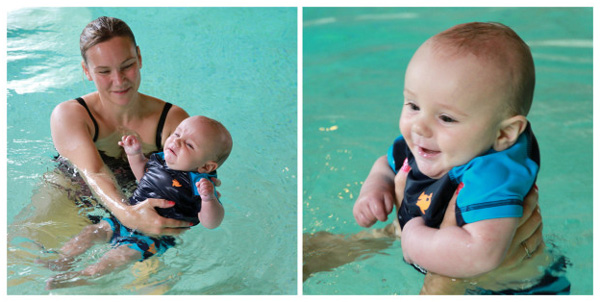
"grrr I'm not happy, mom"
"Ah, now I'm better, I can smile again!"
Aside from the pool, some parents believe that if they react every time their baby cries, then they won't learn how to calm down on their own. In fact, some believe that their child cries because they are trying to manipulate them. However, this is not true, since babies simply need their parents' hugs and care and want to know that they are there for them.
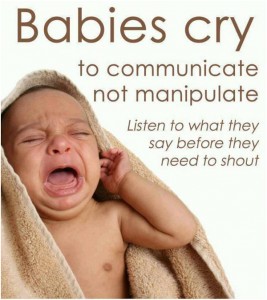
When we react immediately to a baby's cry, it feels safe and loved, and we bond more with it.
Does crying always sound the same? Dunstan Baby Language pioneer Priscilla Dunstan believes not! Her work is based on 8 years of research into the cries and sounds of over 1000 babies. Of course every baby is different, but Priscilla believes that all babies' sounds follow a universal formula.
When a parent is able to hear these “baby words,” they will be able to understand their child’s sounds and signals and feel in control. Of course, this is not true for everyone, as some children’s cries are easier to interpret than others!
Could this be a tool for swimming teachers as well?
Dunstan Baby Language
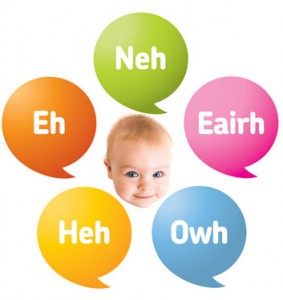
"No" = Hunger
Try to hear the 'n' when the tongue touches the roof of the mouth. It's amazing how some moms feel their breasts producing milk when their baby makes this sound.
"Ow" = Sleepy
This sound resembles a cat's voice and comes from the yawn reflex.
"Heh" = Discomfort
Try to listen for the 'x'. Your baby may be getting hot or cold, his diaper may need changing, or his clothes may be too tight.
"Ear" = Abdominal pain / gas
Try to hear the 'r' reflexively caused by pressure on the lower intestine.
"Eh" = Burping
The sternum reflex pushes air out.
ATTENTION: The research of so-called “baby experts” should not belittle the natural instincts of parents. Every baby is different, and so is their crying. We should always encourage parents to be more confident in order to get to know their child better. When we see a parent struggling and not being able to meet their child’s needs, perhaps we should mention it.
Let's move on to the pool now...
Swimming lessons should always be a fun experience, for both parents and babies. Forcing a baby or toddler to do something against their will is definitely a big mistake. These awful “self-rescue” videos are proof. The repetitive crying and screaming of young children often goes unnoticed.
Does your swim school follow policies that discourage crying?
When a baby starts to get fussy, give up, and pull away from the parent, they are definitely trying to say something. Encourage parents to check in on all of their children's obvious needs (tiredness, hunger, sleepiness, or cold).
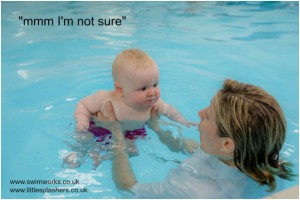
It's better to stop swimming than to let your baby cry loudly. Look at him, ask him how he's feeling, and try to calm him down by holding him and rocking him gently. If the crying turns into screaming, then it's time to stop the lesson for the day.
Babies know how to express their emotions. They express their distress by crying. Prolonged distress can have a negative effect not only on swimming lessons but, as has been scientifically proven, on the baby's brain, which secretes the toxic stress hormone "cortisol». Stress should be avoided whenever possible, as it can lead to a tendency towards chronic anxiety in the future (Gerhardt 2004). The good news is that babies do not need perfection. Interaction with parents should simply be “good”. Children quickly become aware of reality and see that life is not always perfect (Winnicott, 1992).
A guide for parents – useful tips for less stress and crying
1. Arrive at class early enough to have enough time to relax and get ready.
2. Schedule the lesson according to the baby's meal and sleep times.
3. Choose a swimming school that helps you relax during the lesson.
4. The gentle holding and movements in the pool will help both you and your baby relax.
5. Forget what the other kids are doing in class and focus your attention on your beautiful baby. Smile and talk to him.
6. Try diving only with a qualified swimming instructor.
7. Listen to your baby's sounds and understand them before they turn into crying.
8. If any activity during bath time upsets your baby, try not to stress. Just take a break and reassure your baby.
9. If the swimming school encourages you to continue or ignore your baby's crying... it's probably time to look for another baby swimming school.
Enjoy the joy that baby swimming offers!
Translation: Katerina Liakopoulou
Sources:
Dunstan Baby Language
Priscilla Dunstan Interview on Oprah
IAIM, Listen to Baby before they Shout
Center on the Developing Child. Toxic Stress in the Developing Brain, Harvard University
No Crying Policy – World Wide Swim School
Gerhardt, S. 2004 Why Love Matters: How affection shapes a baby's brain.Routledge
Winnicott, D. 1992 Pediatrics to Psychoanalysis. Karnak
 English
  Greek
Greek